

Kaluapuhi Trail
An easy, shaded forest hike in Kōkeʻe State Park featuring native ōhiʻa and koa trees, with unique redwood and sugi groves and excellent birdwatching opportunities. Ideal for families and casual walkers seeking a gentle nature walk without panoramic views.
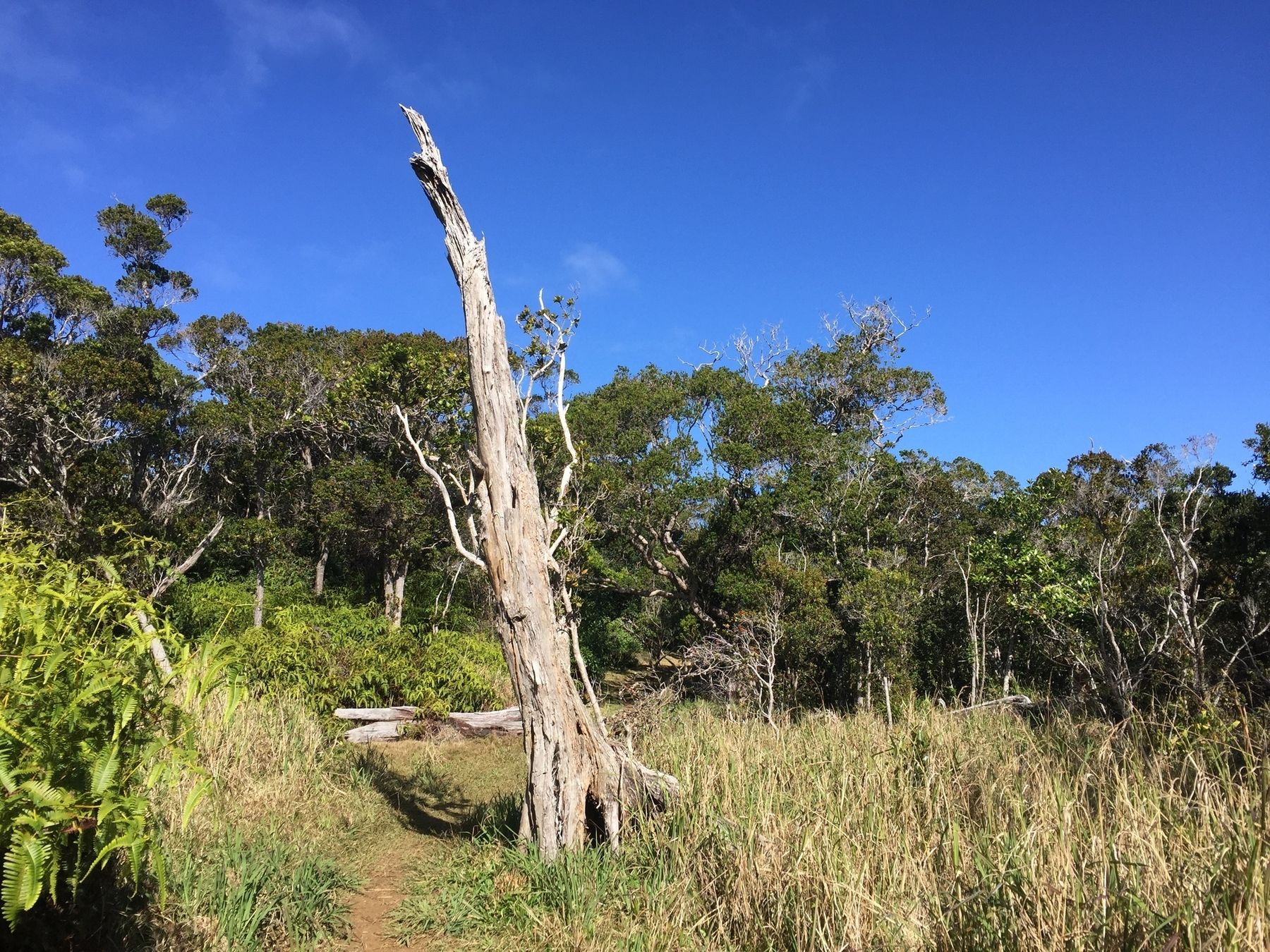
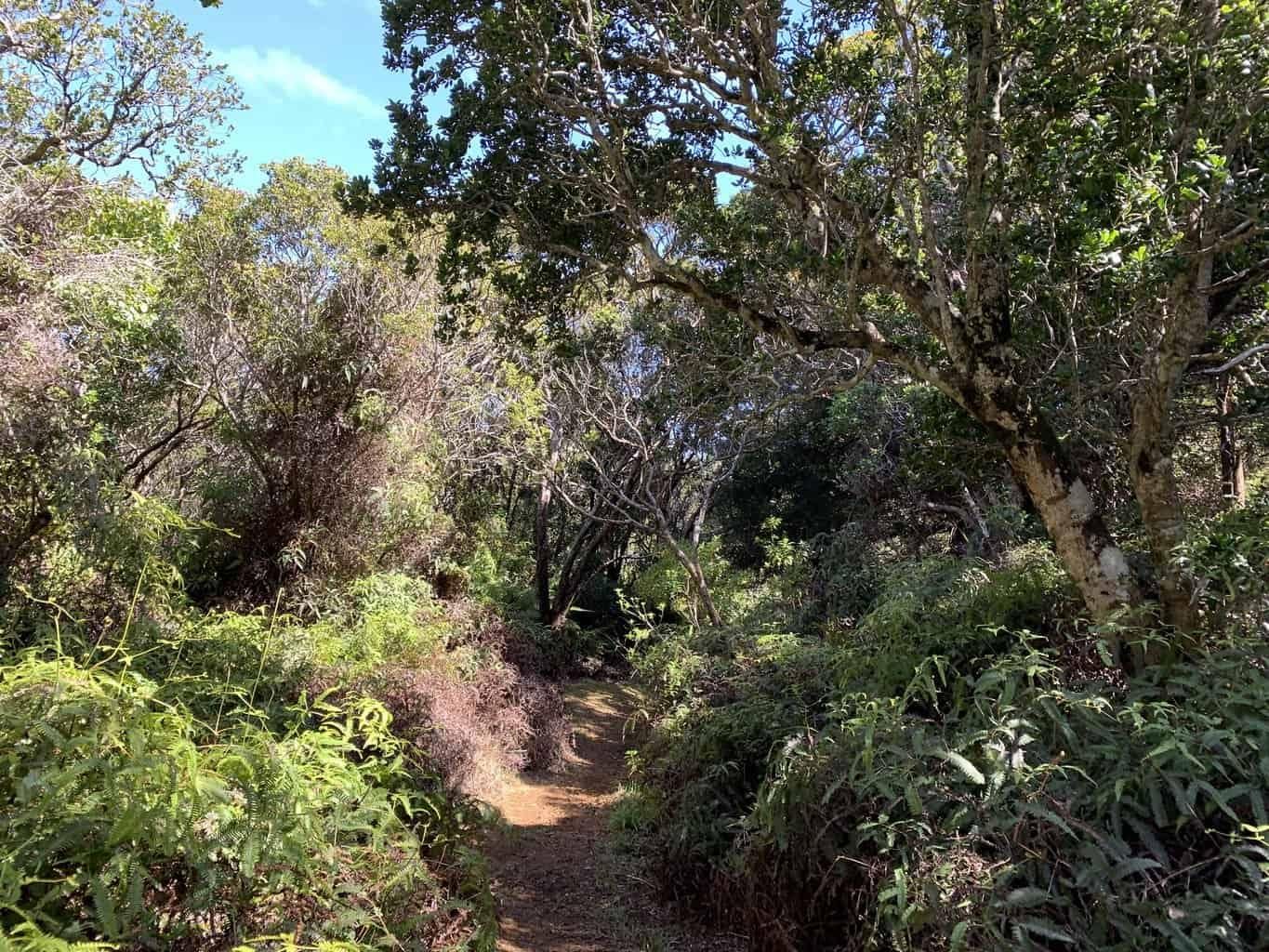
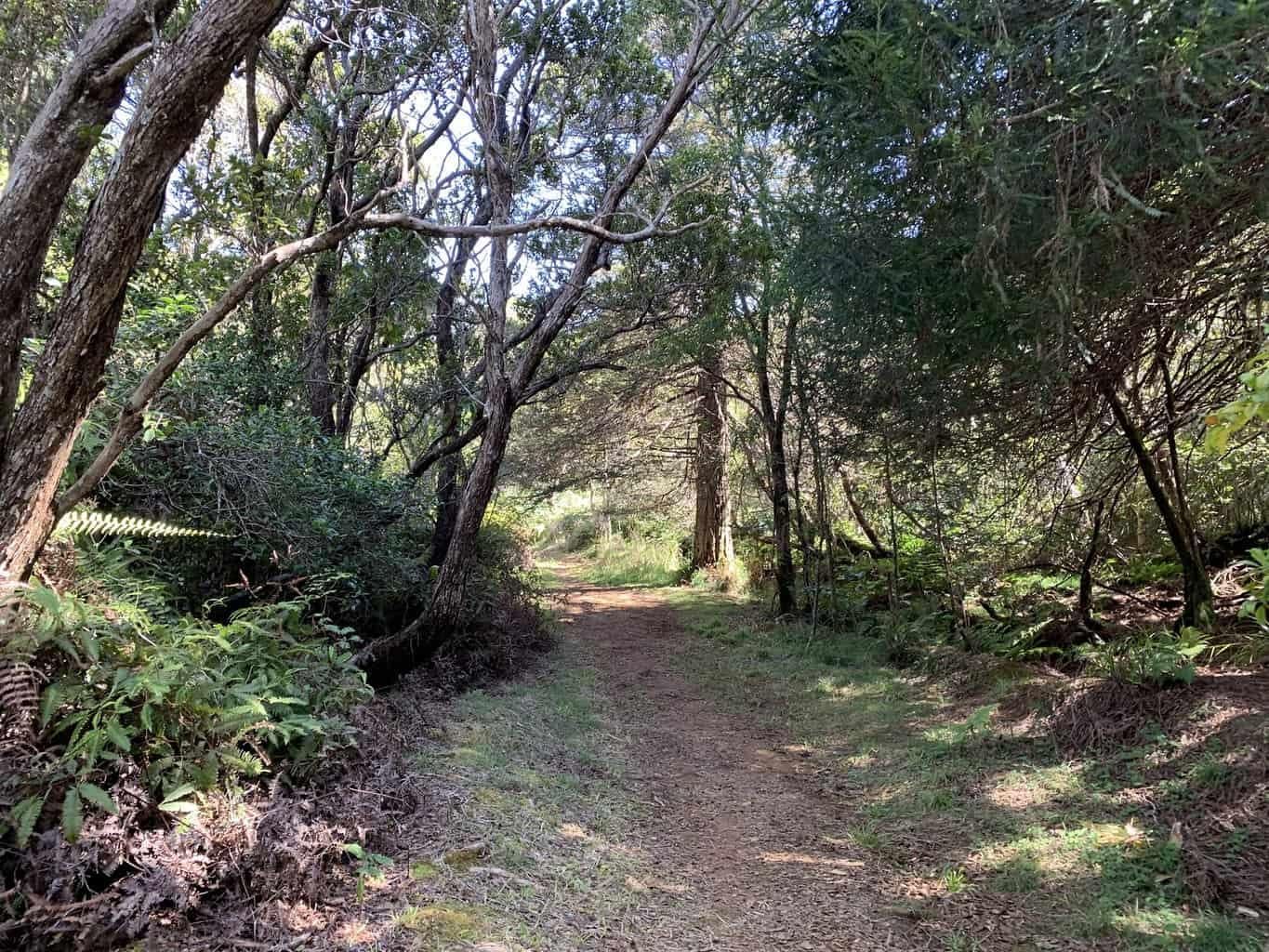
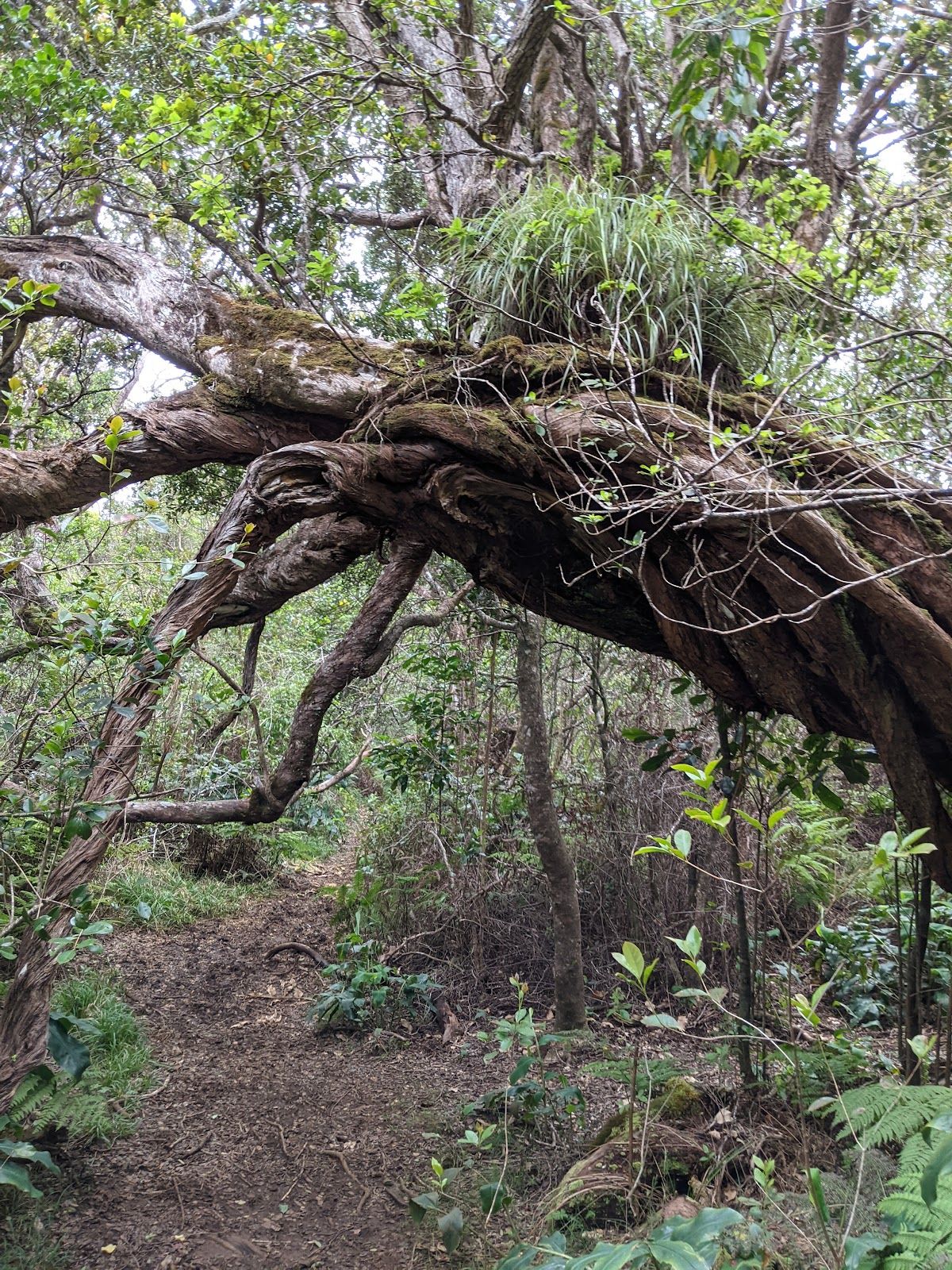
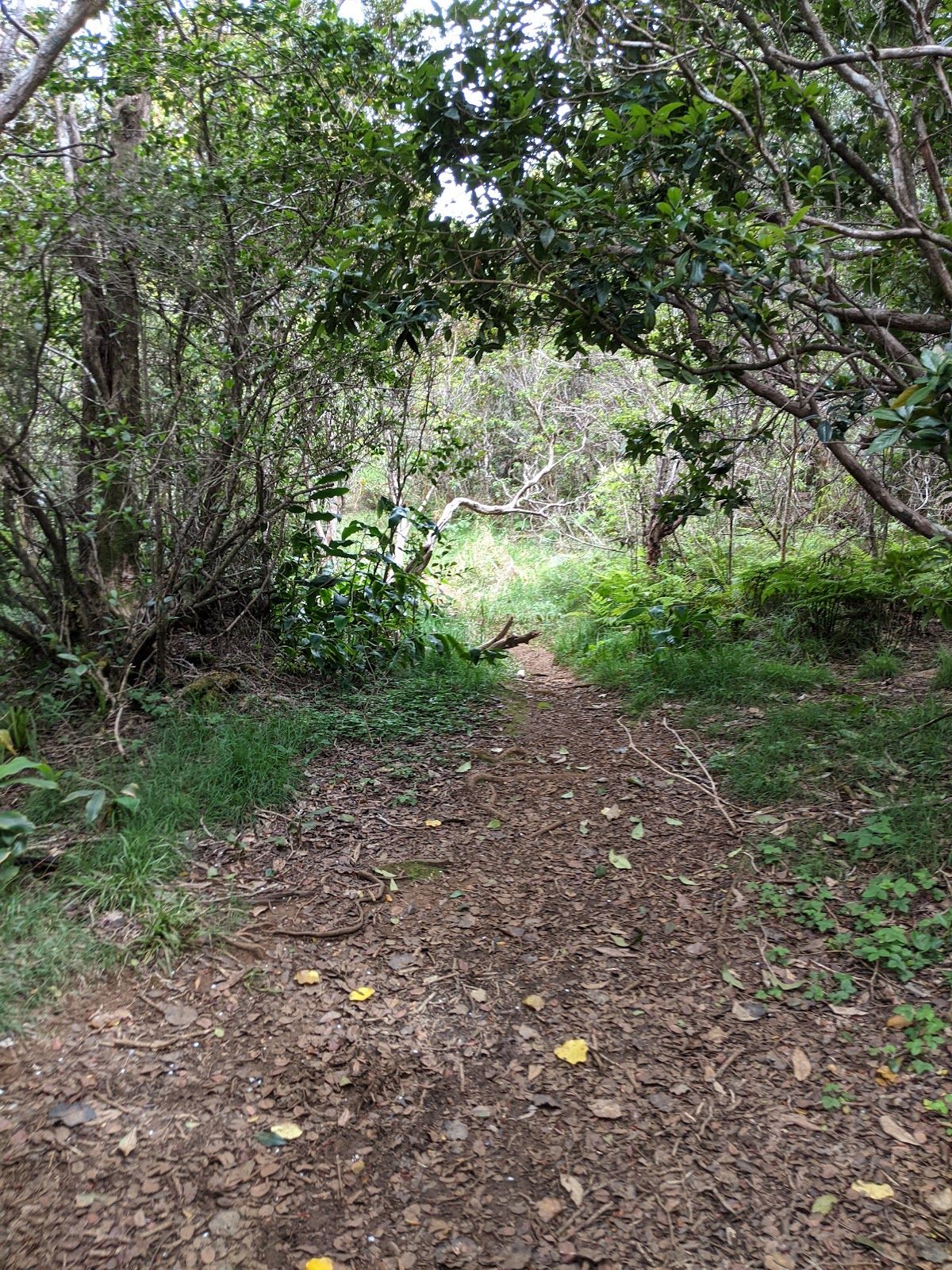
- Shaded forest trail beneath native ōhiʻa and koa trees
- Groves of introduced redwood and sugi trees
- Good chance to hear and spot native birds like ʻapapane
- Cool, misty high-elevation atmosphere
Kaluapuhi Trail is an easy forest hike in Kōkeʻe State Park on Kauaʻi’s West Side, and it stands out as a low-effort way to experience the island’s high-elevation uplands without committing to a long or exposed trek. Instead of big canyon views, the route offers a quiet walk through misty native forest, with an unusual mix of ʻōhiʻa and koa alongside planted redwood and Japanese sugi trees. That contrast gives the trail a distinct personality: shaded, cool, and atmospheric, with just enough novelty to feel memorable on a day spent exploring Waimea Canyon and Kōkeʻe.
A gentle walk through Kōkeʻe’s upland forest
The trail follows the line of an old forestry track and stays mostly flat, making it one of the easiest nature walks in the area. The common outing is a short out-and-back of roughly 2 to 2.5 miles, even though the full route is longer. That shorter version is the one most visitors use, and it works well as a relaxed leg-stretcher between scenic drives and lookout stops.
What makes the walk worthwhile is the setting more than the destination. Kōkeʻe’s high elevation keeps things cooler than the coast, and mist often hangs in the forest, softening the light and giving the trail a calm, enclosed feel. It is also a good place to slow down and listen: native birds such as ʻapapane are often part of the experience, and birdwatchers will likely get more out of this trail than sightseers chasing dramatic panoramas.
The redwood and sugi groves add a surprising layer to the route. They are not the main event, but they create a striking texture among the native trees and help distinguish Kaluapuhi from other short forest walks in Hawaiʻi.
How it fits into a Kōkeʻe day
This is best treated as a short stop rather than a centerpiece hike. It fits neatly into a day built around Kalalau Lookout, Puʻu o Kila, and the Kōkeʻe Natural History Museum. Because the trailhead sits just past Kalalau Lookout off Kōkeʻe Road, it is easy to pair with the area’s other overlooks without adding much driving.
Parking is one of the main logistics to plan around. Space at the trailhead is extremely limited, so using the Kalalau Lookout lot and walking a short distance to the start is often the more realistic approach. There is also an entrance fee for non-Hawaiʻi residents in Kōkeʻe State Park, and day-hikers should be prepared to pay that as part of a broader Waimea Canyon and Kōkeʻe visit.
The trail itself has no facilities, so water, restrooms, and other basics need to be handled before setting out. The nearest restrooms are at the lookout area or the museum.
Mud, navigation, and the main tradeoff
Kaluapuhi Trail is easy in profile, but not always easy in conditions. Mud is a real possibility, especially after rain, and the red dirt can stain shoes and clothing. Roots, overgrowth, and occasional downed trees can also make the path feel rougher than its gentle grade suggests.
Navigation is another small but important caveat. The main route is generally straightforward, but side tracks made by pigs can create confusion in spots, and cell service is unreliable in the park. An offline map is a smart precaution.
One thing not to do: try to turn the trail into a road walk loop. Kōkeʻe Road is narrow, curvy, and not pedestrian-friendly. The safe move is to return the way you came on the trail.
Best for a rest-day hike, not a view chase
Kaluapuhi Trail is a strong fit for families, casual hikers, birdwatchers, and anyone who wants a peaceful, low-strain walk in the uplands. It also works well as a “between adventures” activity on a Kōkeʻe day, especially for travelers who have already done one of the canyon lookouts and want something quieter.
It is not the right pick for sweeping vistas or a big physical challenge. Anyone hoping for open canyon drama or Nāpali-style views should look elsewhere. But for a shaded forest walk with native plants, cool air, and a quietly distinctive setting, Kaluapuhi Trail is one of the best short stops in the area.